Bonsai Mastery
Bonsaii : Website design and branding case study
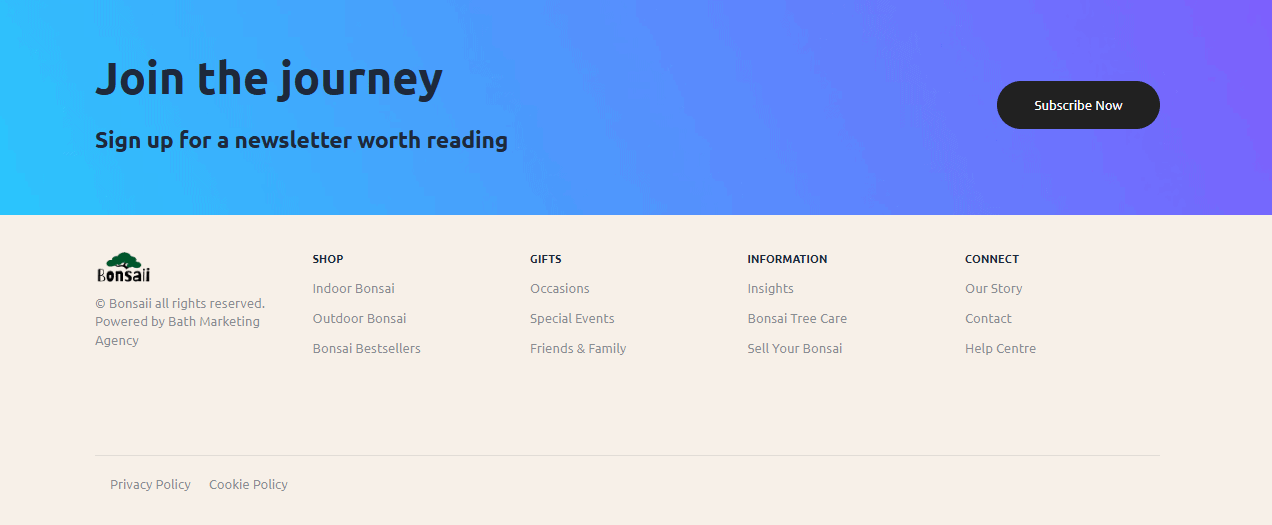
Stay in touch for insights, strategies and news

Crafting a Premium, Ethical Bonsai Brand
BATH MARKETING AGENCY
Bath Marketing Agency partnered with Bonsaii to create a premium, ethically focused brand and ecommerce website for the UK market, specialising in bonsai trees, starter kits and personalised gifts. The brief called for a refined visual identity that communicated craftsmanship and sustainability, a straightforward ecommerce experience optimised for next‑day UK delivery, and a content strategy that would position Bonsaii as both a retail destination and a trusted resource for bonsai enthusiasts and gift buyers.
This case study documents the approach, strategic thinking, creative decisions, UX and technical execution of the Bonsaii project. The work covered brand and tone development, information architecture, UX and UI design, ecommerce build, content and SEO foundations, photography/art direction and a launch roadmap. The site has now launched, delivering a luxury yet accessible brand presence tailored for UK shoppers and plant lovers.
Project Overview
Client: Bonsaii
Industry: Retail & Ecommerce
Project Goal
To create a premium, ethically focused brand and a mobile-first ecommerce website for the UK market that communicates craftsmanship and provenance, simplifies buying and gifting live bonsai trees (including personalised and next‑day delivery options), and establishes content foundations for long-term organic growth and customer education.

Challenge and objectives
Bonsaii entered a market with passionate hobbyists, DIY content creators and discerning gift buyers. The core challenges were:
- Establish a premium, believable brand that balances craftsmanship and accessibility. Bonsai is a niche hobby with deep traditions; the brand needed to convey authority without alienating beginners.
- Reflect Bonsaii’s ethical sourcing and sustainable practices in brand story and product presentation.
- Design an ecommerce experience built around product discovery, personalisation for gifts and operational realities such as next‑day delivery across the UK.
- Create a site architecture and content strategy that supports long‑term organic growth via bonsai education, guides and how‑tos.
- Build a mobile‑first experience with fast performance and accessible design patterns to serve a broad demographic — from tech‑savvy shoppers to older, craft‑oriented buyers.
- Launch a distinctive luxury lifestyle brand that feels authentic to bonsai culture.
- Make it simple to buy and gift a bonsai online (clear product information, care guidance, gift options).
- Set the technical and content foundations for sustainable organic growth and conversions.
Research and insight
Discovery workshops
We began with a two‑day discovery workshop with the Bonsaii founders to align on commercial goals, product range, logistics and customer profiles. Key themes that emerged:
- Dual audience: Serious enthusiasts seeking specimen trees and collectors; and gift shoppers or beginners seeking a beautiful, easy‑care centrepiece.
- Emotional drivers: Buyers are motivated by beauty, connection to nature, the craft of keeping living art and the appeal of unique, lasting gifts.
- Friction points: Hesitation to buy living plants online (quality concerns), uncertainty around care needs, and confusion over delivery windows and returns.
Market and competitor audit
We audited UK and international bonsai retailers, premium houseplant brands and gifting sites. Findings informed positioning:
- Many bonsai sellers leaned heavily on tradition and technical detail, which risked alienating novices.
- Gift sites emphasised packaging and immediacy but lacked botanical authority.
- Opportunity: a brand that could credibly serve both audiences — authoritative, craft-led content with approachable product education and curated gift flows.





Information architecture & customer journeys
We mapped primary journeys:
- Explorer: Browses inspiration, reads guides, converts via bestsellers.
- Gift buyer: Filters for ready‑wrapped options, next‑day delivery and personalised messaging.
- Beginner: Seeks starter kits and step‑by‑step care guides.
- Collector: Requires species detail, provenance and styling notes.
Brand strategy and identity
Positioning
We defined Bonsaii’s positioning as “premium, ethically grown bonsai for modern homes — small trees, lasting beauty.” The brand needed to be simultaneously expert, serene and approachable.
Brand pillars
- Crafted authenticity: Celebrating traditional bonsai practice with clear provenance and grower stories.
- Accessible elegance: A calm, considered aesthetic that makes bonsai approachable for novice owners.
- Ethical stewardship: Transparent sourcing, sustainable packaging and responsible cultivation.
Tone of voice
We developed a tone that is warm, confident and educational:
- Avoiding jargon when unnecessary; explaining technical terms when used.
- Short, evocative lines for product pages and hero messaging; longer, helpful content in guides and care notes.
- Encouraging language for first‑time buyers, with reassurance on guarantees and delivery care.
Visual identity
Logo and mark
The logotype needed to sit comfortably on product labels, pots and digital headers. We designed a minimal wordmark paired with a secondary emblem — an abstract, single‑line bonsai silhouette that reads well at small sizes and as a social avatar.
Colour palette
- Deep charcoal for typography to give a premium, readable base.
- Olive and muted moss greens to reference foliage and sustainability.
- Warm clay/terracotta accent to evoke pots and craftsmanship.
- Pale neutral backgrounds to allow product photography to breathe.
Typography
We paired a refined serif for headlines (to convey craft and legacy) with a clean sans for body text (modernity and readability). The type scale and weights were optimised for legibility on mobile and desktop.
Photography & visual language
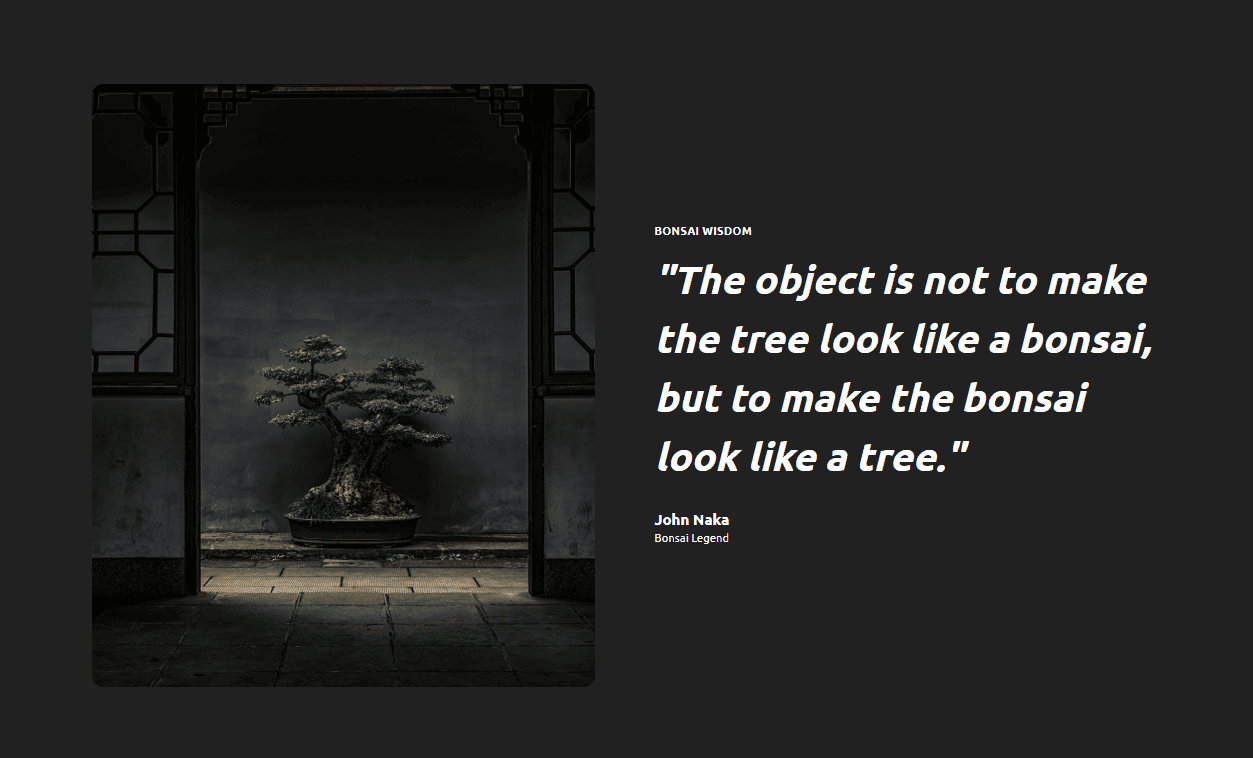
Bonsaii’s imagery had to communicate plant health, scale and lifestyle. We established a photography system:
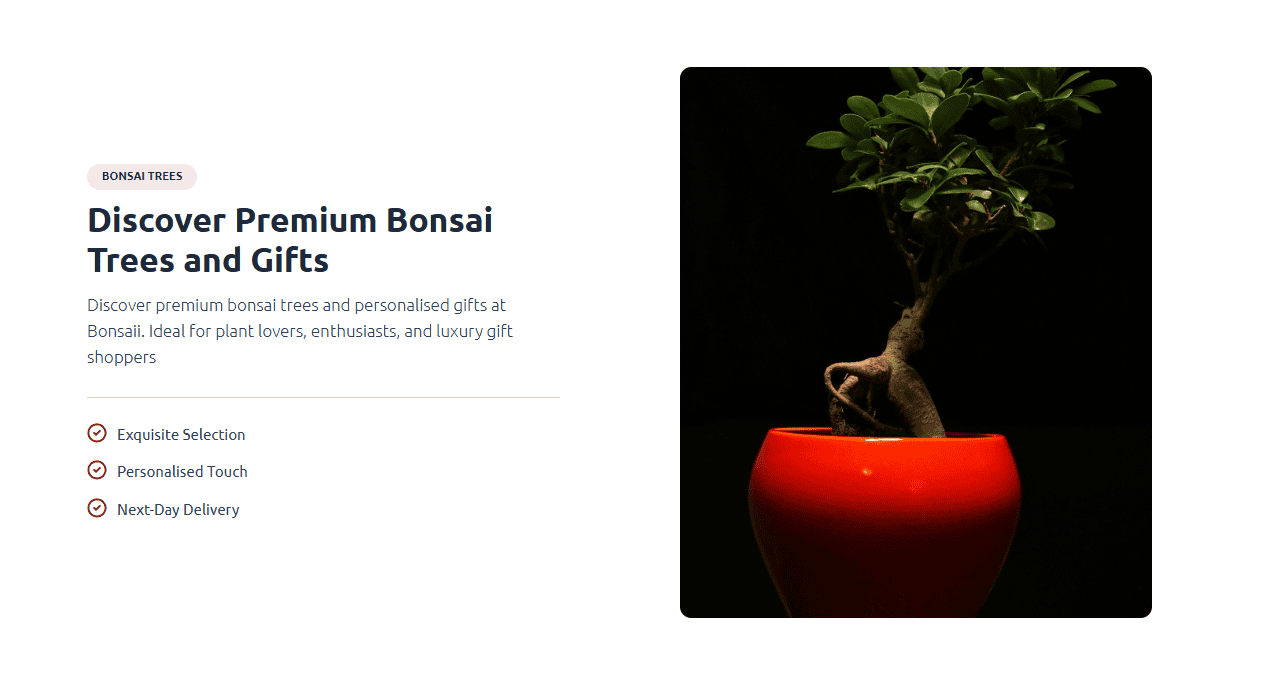
- Product shots: Clean, studio-style, on neutral backgrounds with multiple angles, close‑ups of foliage and root structure, and a scale reference.
- Lifestyle images: Calm interiors showing bonsai as living centrepieces; subtle human presence to convey scale and ownership.
- Detail shots: Pots, handwritten care tags, packaging and grower portraits to support the ethical story.
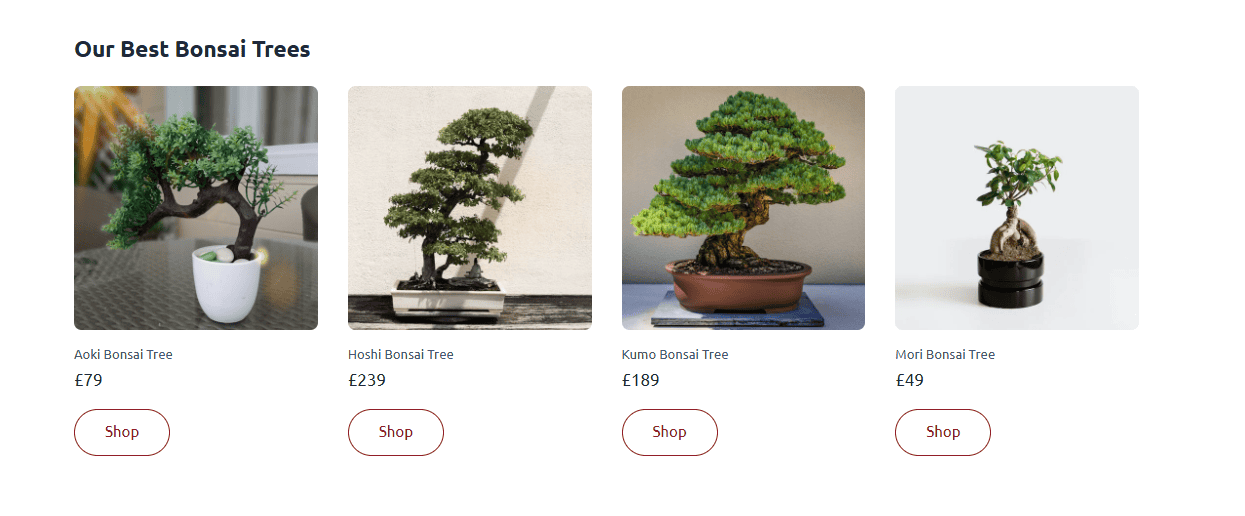
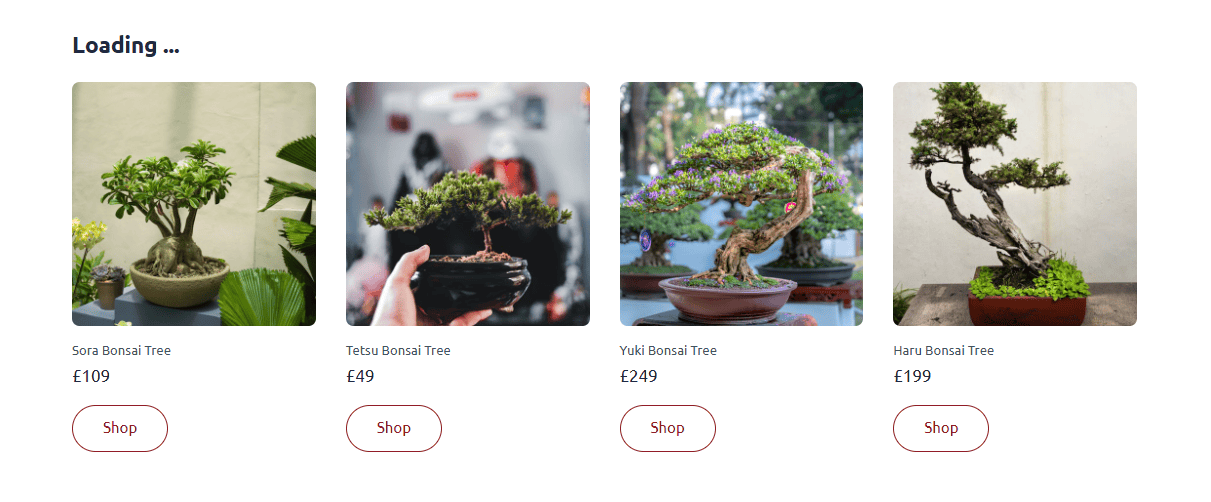
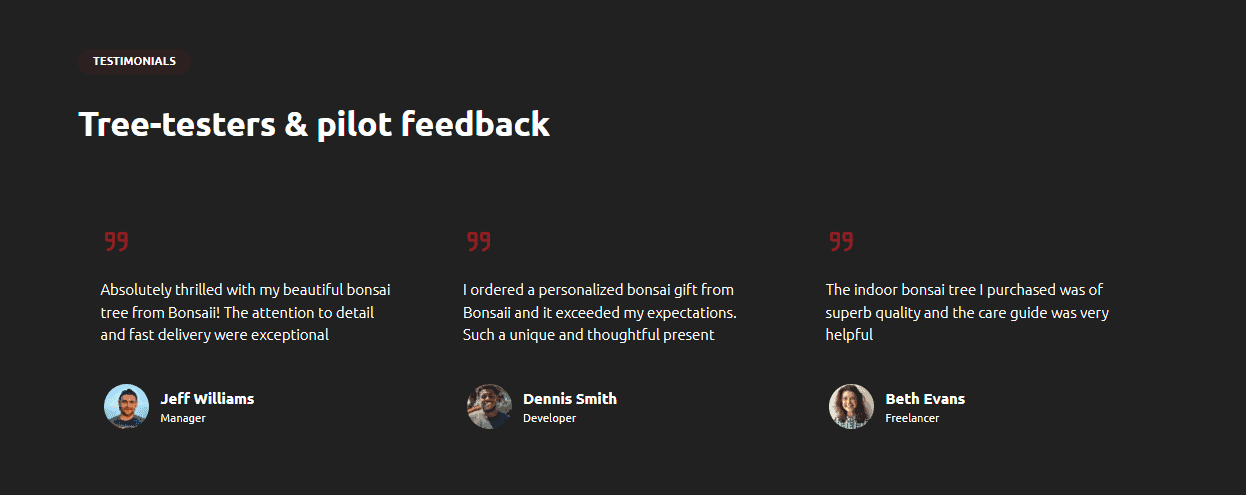
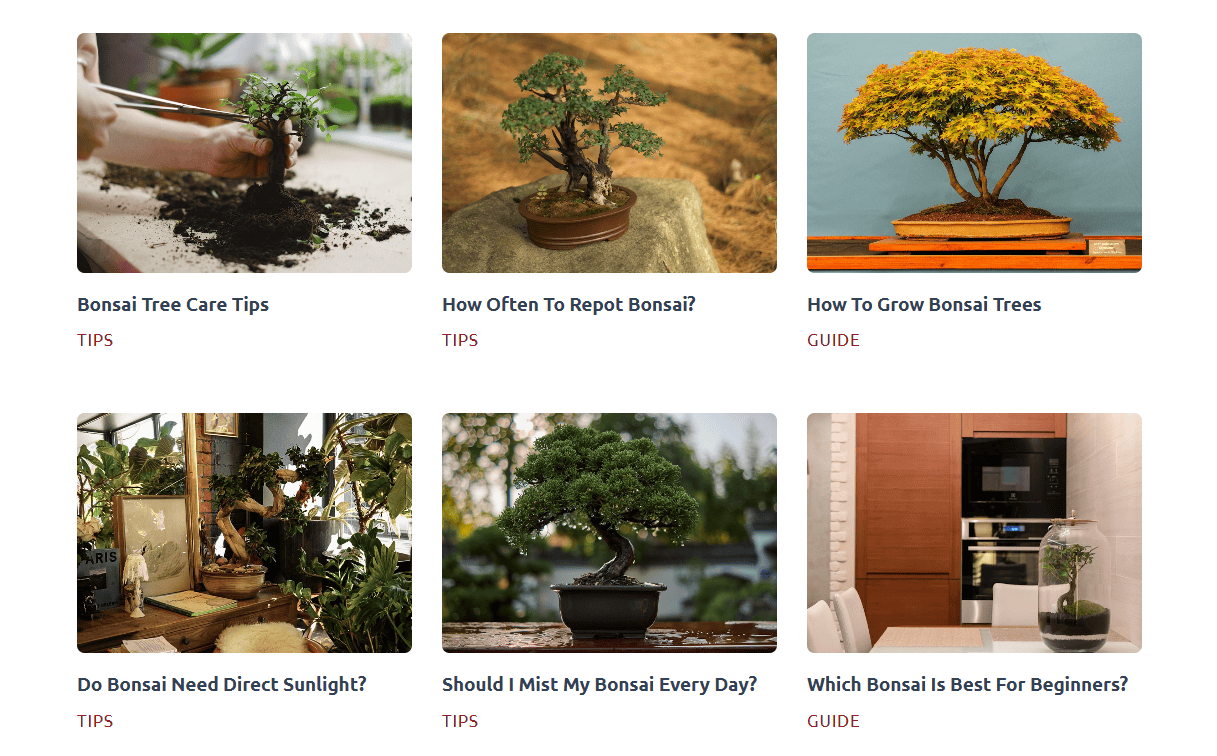
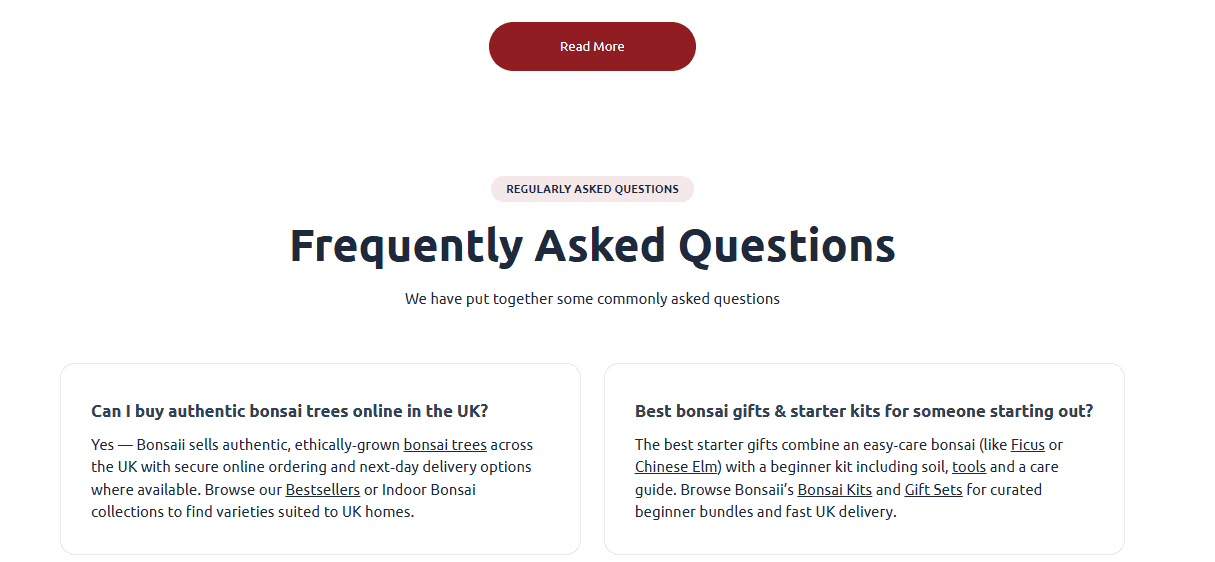
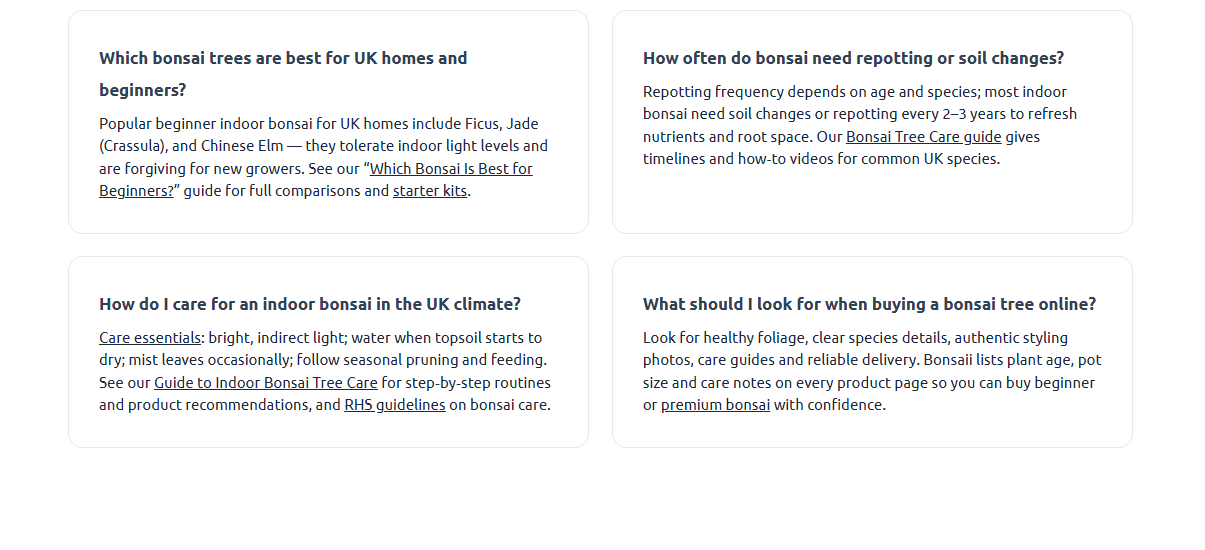
Screen Shots

UX and design
Design principles
- Reduce cognitive load: Clear hierarchy, consistent calls to action.
- Build trust: Prominent provenance, care guides, and a visible returns policy for live plants.
- Guide to conversion: Education-first approach on product pages with care expectations and FAQ inline.
Homepage Goals: inspire, route users by intent, promote bestsellers and gift options.
Sections:
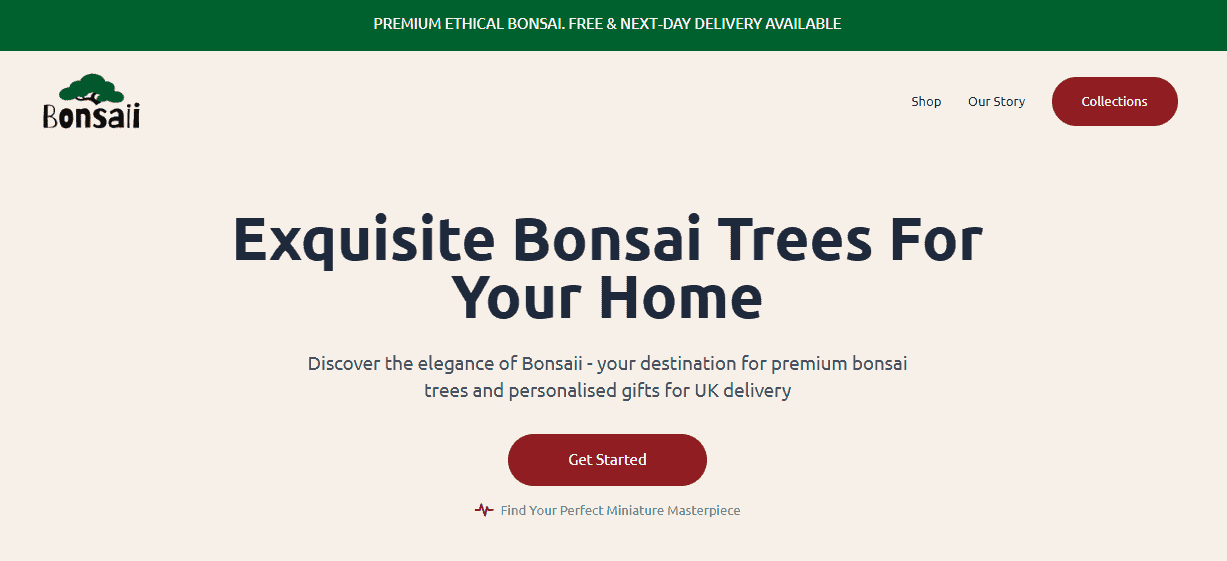
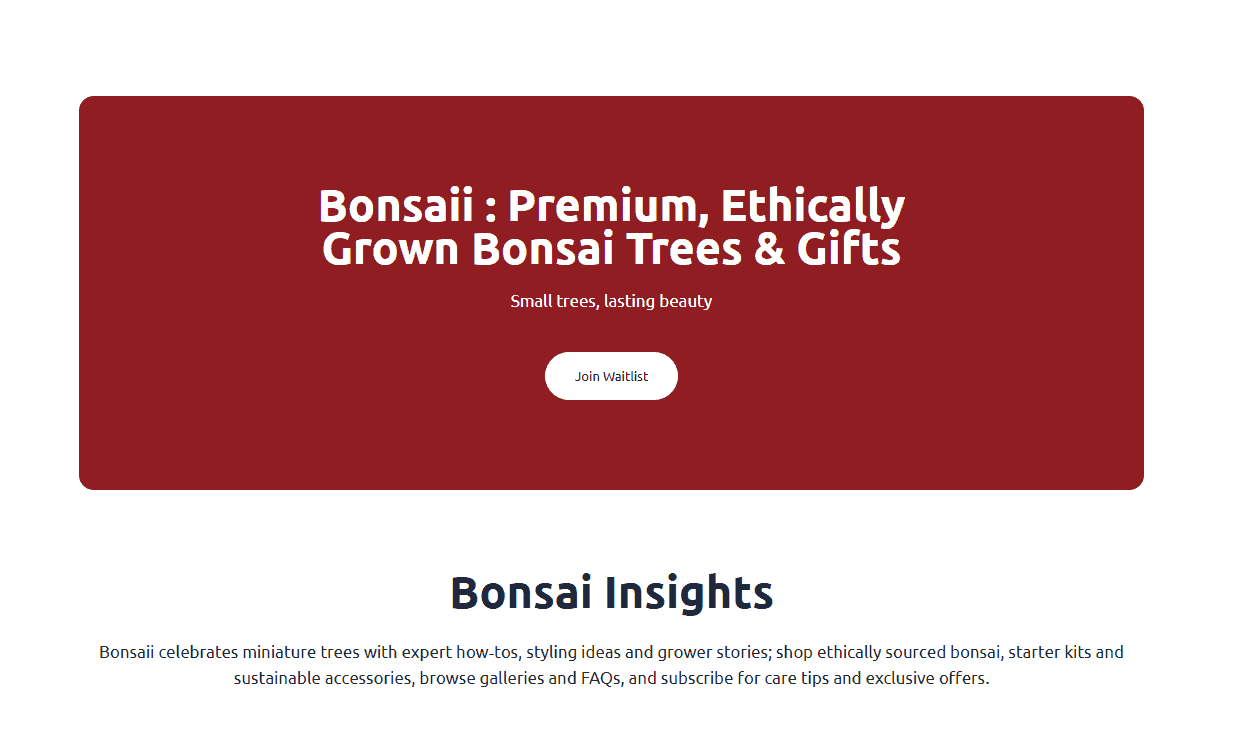
- Hero: A calm hero with headline “Premium, ethically grown bonsai” and immediate CTA to Shop Trees and Gifts.
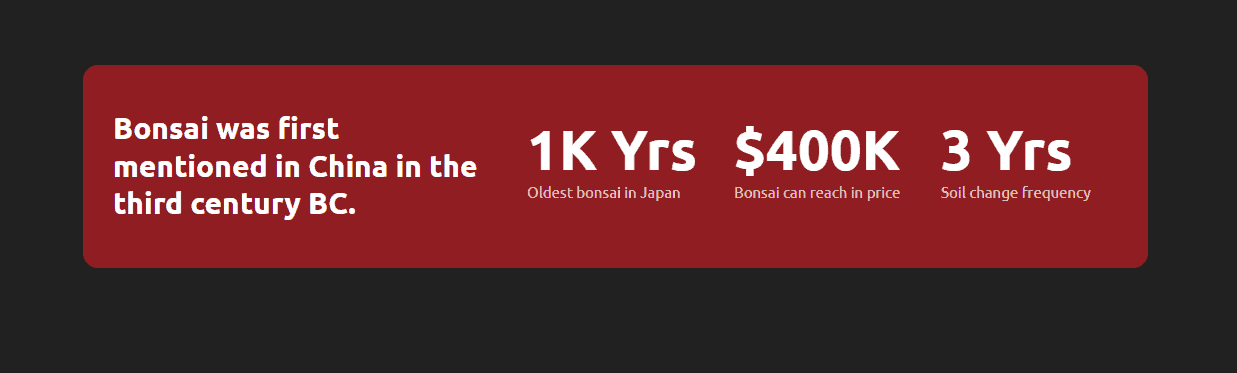
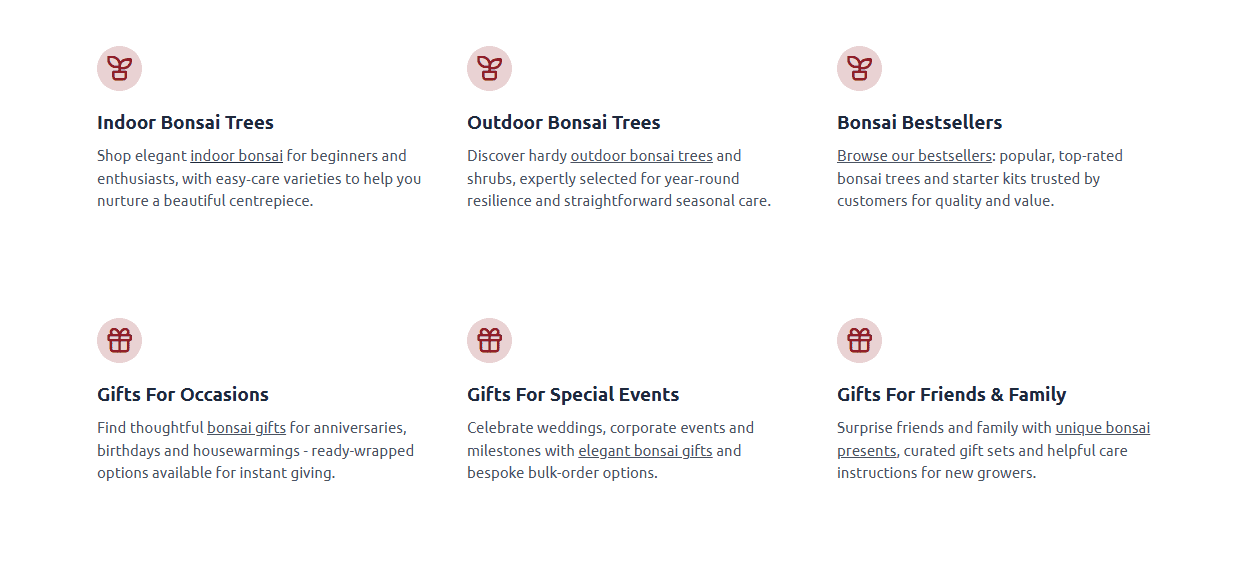
- Story strip: Short explainers on ethical sourcing, next‑day UK delivery and personalised gifts (iconography to aid scanning).
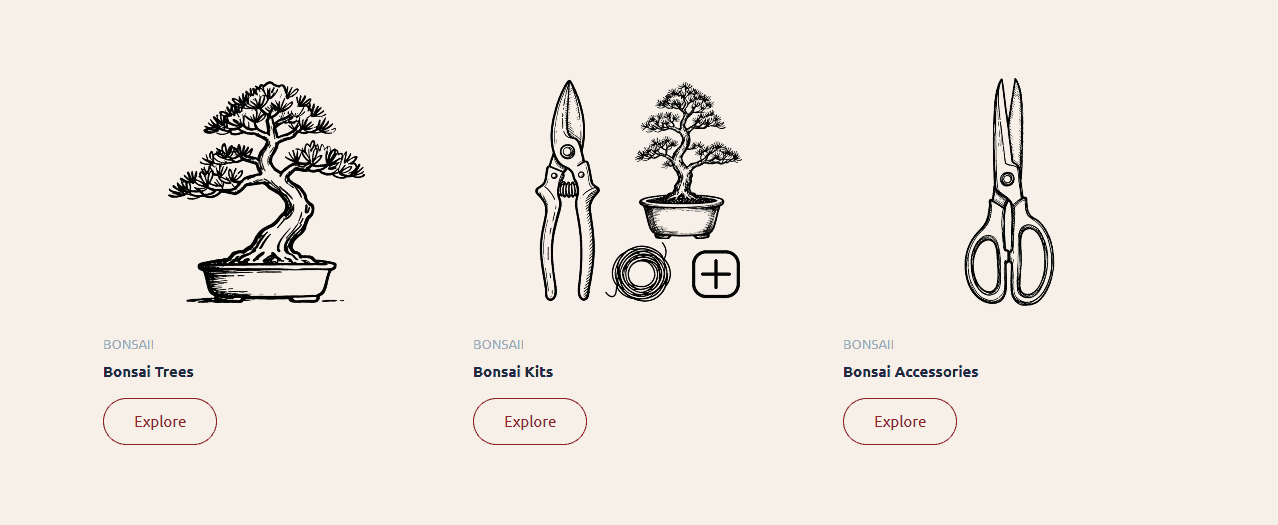
- Product grids: Curated collections — Bestsellers, Indoor for Beginners, Gifts for Occasions.
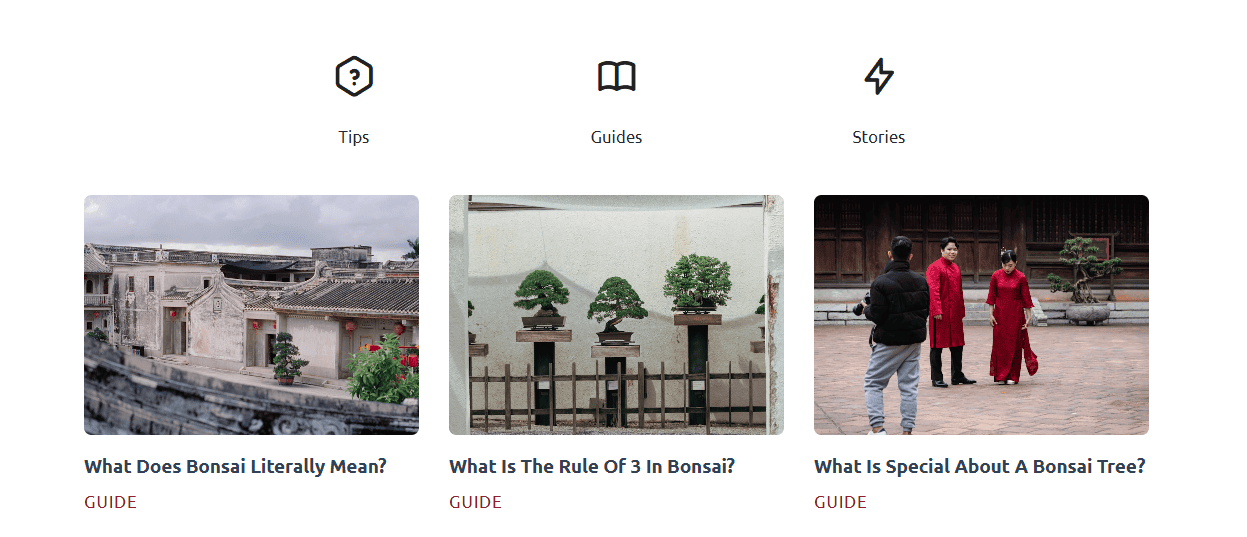
- Guides teaser: Links to care articles and a featured video on “How to get started with your first bonsai”.
- Social proof: Rotating testimonials and a grower feature to reinforce quality and service.
Product pages
We focused product pages on clarity and reassurance:
- Large gallery with studio and lifestyle images; zoom and multi-angle support.
- Key facts panel: species, age, pot size, difficulty, ideal location, and a short care snapshot.
- Ethos panel: provenance, grower story and sustainability badges (ethically grown, recyclable packaging).
- Gift options: Personalised message, gift wrap preview, and next‑day delivery estimator.
- Care tabbed content: One‑click access to care schedules, watering frequency and repotting advice.
- Related products and kits to encourage AOV through bundles.
Collections and discovery
We built faceted navigation that matches mental models: purpose (starter, gift, display), light requirements (indoor/outdoor), difficulty and price. Collections include curated themes like “Bonsai for Beginners”, “Gifts under £75” and “Wedding & Corporate Gifts”.
Content strategy and editorial
Content goals
- Reduce purchase friction through helpful education.
- Build search visibility with evergreen guides and how‑tos.
- Nurture buyers with email journeys that provide care tips and re‑engage.
Content pillars
- Learn: Beginner guides, species profiles, care schedules, repotting HOW‑TOs.
- Inspire: Styling advice, before/after galleries, customer stories.
- Buy: Gift guides, product spotlights, bundle recommendations.
Key content pieces developed at launch
- “Which Bonsai Is Best for Beginners?” — a long‑form guide with comparison tables and CTAs into starter kits.
- “How Often to Repot Bonsai?” — a practical, step‑by‑step article with seasonal timing and tool recommendations.
- Product care pages — standardised for every tree with printable care checklists.
- An editorial homepage module for seasonal campaigns (e.g., Christmas gifting, Mother’s Day).
Email and lifecycle
We mapped a simple post‑purchase lifecycle:
- Order confirmation with care essentials and expected delivery info.
- Day‑of delivery email with handling tips.
- 1‑week follow up with a quick health check and link to beginner content.
- 3‑month reminder for feeding/pruning and cross‑sell suggestions (tools, soil, starter kits).
SEO foundations
Technical SEO
On launch we implemented technical essentials:
- Clean, semantic markup and schema for products and articles to aid rich snippets.
- Mobile‑first responsive build and image optimisation.
- URL structure that reflects collections and species taxonomy for long‑term clarity.
Content SEO
We targeted content clusters around buyer intent: transactional (buy bonsai, bonsai gift), informational (how to repot bonsai, indoor bonsai care) and navigational (best bonsai for UK homes). The editorial calendar prioritised evergreen guides and plant profiles, designed to attract backlinks and social sharing from plant communities.

Ecommerce platform and development
Platform choice
We recommended and implemented an ecommerce platform that balanced performance, extensibility and ease of content management. The build focused on:
- Rapid product management for a growing catalogue.
- Straightforward UK‑centric shipping rules for next‑day delivery and gift options.
- Integrations for email automation, analytics and customer service.
Key integrations
- Payment gateway with multi‑card support and 3‑D Secure.
- Fulfilment and shipping rules to offer next‑day delivery where possible; estimated delivery messaging on product pages.
- CMS for editorial content and product care pages.
- Tagging and product attributes to support faceted search and merchandising.
Performance and accessibility
- Lazy loading for gallery images and on‑demand video embeds.
- Critical CSS and server‑level caching to improve first paint.
- Accessibility checks: semantic headings, alt text for images, keyboard focus states, and colour contrast tuned for the palette.
Quality assurance and testing
We ran cross‑device testing, accessibility audits and user tests with a small panel of target customers (gift buyers and beginners). Findings shaped tweaks to microcopy (delivery reassurance), CTAs and product filter defaults.
Packaging and fulfilment UX
Because buying a living plant online can be anxiety‑provoking, we designed clear packaging visuals and a fulfilment UX:
- Product pages show “How we pack your bonsai” with step‑by‑step imagery.
- A downloadable care card included in orders and a printable quick‑start guide.
- Clear returns and guarantee copy for plant health issues.
Launch and go‑to‑market
Soft launch
We executed a soft launch to a closed list of email subscribers and friends/family to validate fulfilment and the post‑purchase communications flow.
Public launch assets
- Homepage hero campaign focused on gifting and next‑day delivery for the immediate window.
- Social organic push showcasing product photography and grower stories.
- Paid social creative tests targeting gift buyers (age 28–55, interest in interiors and gifts) and plant hobbyists (age 25–45).
- Blog launch promoting pillar content and a shared social content calendar to drive early discoverability.
Measurement plan
Given the site was newly launched, we implemented a measurement framework to track qualitative and quantitative success signals:
- Acquisition: organic, paid, referral and social.
- On‑site behaviour: bounce rates, time on page for guides, product page engagement and add‑to‑cart conversion.
- Fulfilment KPIs: delivery accuracy, damage rates and customer support volumes.
- Post‑purchase engagement: email open/click rates and repeat purchase intention signals.
Results at launch
As the site launched recently, long‑term performance data was not yet available at the time of this case study. Early qualitative signs and internal feedback indicated strong product presentation, clear messaging that reduced purchase anxiety and an improved gift purchase experience. Operationally, the soft launch helped refine packing and post‑purchase communications before public launch.
Learnings and iterative roadmap
What worked well
- Education-first product pages reduced friction for novices by combining product detail with accessible care guidance.
- Ethos and grower storytelling improved perceived authenticity and differentiated Bonsaii from commodity plant sellers.
- Visual system and photography created a premium product feel that works in both product grids and editorial contexts.
Areas for iterative improvement
- Personalisation: adding dynamic recommendations based on browsing and purchase history to increase AOV.
- Enhanced product comparison: a visual tool to contrast species, difficulty and light requirements could help indecisive buyers.
- Reviews and UGC: actively soliciting customer images and stories to build social proof and community.
- International expansion: once UK fulfilment is stable, migrating shipping rules and translations to support broader markets.
Next steps recommended
- Implement a phased personalisation roadmap: simple first-party data initiatives (recently viewed, recommended kits), then explore deeper predictive recommendations.
- Launch a focused review acquisition programme with incentives to gather UGC and build social proof.
- Continue the content calendar: seasonal campaigns (Christmas, Mother’s Day) and how‑to video series for repotting and styling.
- Optimise conversion funnels using A/B tests on product descriptions, hero messaging and gift checkout flow.
- Strengthen PR outreach to interiors and lifestyle press with physical press-ready bonsai samples to drive high-quality backlinks and brand awareness.
Project team and collaboration
The core project team blended Bath Marketing Agency expertise with Bonsaii’s internal knowledge:
- Strategy & account lead: project direction, business goals and stakeholder liaison.
- Brand & creative lead: identity, tone of voice, photography art direction.
- UX/UI designers: wireframes, high‑fidelity mockups and responsive patterns.
- Front‑end & back‑end developers: ecommerce implementation, CMS integration and performance tuning.
- Content strategist & copywriter: editorial plan, product copy and guides.
- CRO and SEO specialist: technical SEO, schema and measurement planning.
- Photographer and retoucher: product and lifestyle shoots.
- Fulfilment consultant: packaging design and delivery UX.
Conclusion
The Bonsaii project is a strategic blend of craft-led branding and practical ecommerce UX tailored for British customers who want both beauty and reassurance when buying living plants online. Bath Marketing Agency’s approach prioritised trust-building through clear product data, ethical storytelling and helpful education, supported by a refined visual system and photography that elevates the product.
Bonsaii launched with a strong foundation for growth: a brand that speaks to both collectors and gift buyers, an editorial programme that will drive long-term organic visibility, and operational design choices that reduce purchase anxiety for living goods. As the site matures, the recommended iterative roadmap — personalisation, review acquisition and richer comparison tools — will help the brand scale while keeping the craft and care of bonsai at its heart.
FAQ
What was the scope of the Bonsaii website development and branding project?
We delivered full brand development (positioning, name validation, tone of voice, logo and visual system), art direction and photography, UX and UI design, front‑end and back‑end ecommerce development, CMS for editorial content, technical SEO foundations, integrations for payments and fulfilment, and launch support including QA, soft‑launch testing and a measurement framework.
Which platforms and technologies were used to build the site?
We selected an ecommerce platform that balanced performance, editorial needs and flexible integrations (CMS, payment gateway and shipping rules). The front‑end was developed with a responsive, mobile‑first approach using modern HTML, CSS and JavaScript practices, server‑level caching and image optimisation for speed. (Specific platform details can be provided on request depending on client confidentiality.)
How did you ensure the website felt premium and aligned with the Bonsaii brand?
We combined a refined typographic system (serif for headlines, sans for body), a muted, nature‑inspired colour palette, and a disciplined photographic style. Product pages feature studio and lifestyle imagery, provenance badges and carefully written microcopy to convey craft and trust. The layout emphasises negative space, calm rhythms and clear calls to action to reinforce a premium feel.
What steps were taken to reduce purchase anxiety for buying live plants online?
We built trust through prominent provenance and grower storytelling, detailed product facts (species, age, pot size), a “How we pack your bonsai” visual section, printable care cards, a clear plant guarantee and a straightforward returns process. The checkout also includes gift options, delivery estimators and reassurance messaging about next‑day fulfilment where available.
How did you approach UX for different customer journeys (beginners, collectors, gift buyers)?
We mapped primary journeys and optimised navigation, filters and content to serve each persona. Beginners see curated starter kits, step‑by‑step guides and simple care snapshots. Collectors get species detail and provenance. Gift buyers are routed to ready‑wrapped options, personalised messages and delivery timing. CTAs and on‑page hierarchy shift subtly to match user intent.
What SEO and content measures were implemented during the build?
Technical foundations include clean semantic markup, product and article schema, mobile‑first responsiveness and optimised imagery. Editorially, we launched pillar guides (e.g., “Which Bonsai Is Best for Beginners?”), species profiles and care articles structured into content clusters to target both transactional and informational search intent and support long‑term organic growth.
Industry recognition and awards: